Restaurant operators lose €5,180 monthly per location on delivery coordination inefficiencies. Manual handoff operations require 2-3 staff members managing driver pickups across UberEats, Bolt Food, Wolt, and Glovo while food temperature drops 2°C every minute.
Heated smart lockers transform this operational model entirely. These temperature controlled food lockers maintain 60-65°C for 2+ hours while automating driver coordination through smart food locker systems. Burger King eliminated handoff labor costs completely using heated parcel lockers. Domino's deployed heated lockers for pizza delivery, increasing peak throughput 70%. Happy Bar & Grill's restaurant heated locker configuration reduced temperature complaints by 89%. Bespoke heated locker solutions integrate with any POS system in 48 hours, require 1.5m² floor space, and deliver a 3.8-month ROI from labor elimination.
Quick Facts: Heated Smart Lockers for Restaurants
Labor Cost Elimination (Heated Smart Locker ROI)
Restaurant operators spend €2,400-€3,600 monthly coordinating driver pickups across delivery platforms. Heated smart lockers automate this entirely - staff place orders in temperature-controlled compartments, clients retrieve via PIN codes in 28 seconds. Burger King (Saudi Arabia) eliminated handoff labor completely. ROI calculation: €12,000-€13,500 hardware investment ÷ €2,900 monthly savings = 4.2-month payback. Multi-location chains deploying 4+ heated food lockers access 18% volume off, accelerating ROI to 3.4 months while maintaining 99.99% system uptime across 7,000+ global installations. See the complete smart locker pricing breakdown for different configurations.
Temperature Performance (Hot Food Delivery Locker Standards)
EU food safety regulation EC 852/2004 mandates >60°C hot holding to prevent bacterial growth. Hot food delivery lockers maintain 60-65°C with ±0.5°C precision for 2+ hours through industrial insulation and heating elements consuming 1.8-2.4 kWh daily (€6-8 monthly). Independent testing validates heat retention without power for 45-60 minutes. Deployment data shows a 89% reduction in temperature complaints - directly addressing the 42% of delivery issues caused by cold food according to National Restaurant Association research. Compare refrigerated locker temperature control for cold storage applications.
Peak Capacity Increase (Restaurant Heated Locker Throughput)
Manual coordination processes 30-35 orders hourly with 8-12 minute driver wait times per restaurant operations research. Restaurant heated lockers reduce pickup to 28 seconds, enabling 80-100 orders hourly - a 40-70% capacity boost. Domino's documented a 70% increase (50→85 pizzas/hour) during dinner rush. Burger King achieved 47% daily growth (180→280 orders) without kitchen expansion. The bottleneck was never cooking - it was handoff coordination that automated heated locker systems eliminate completely. Learn how last-mile delivery economics apply to restaurant operations.
Multi-Temperature Capability (Bespoke Heated Locker Solution)
Casual dining operators require simultaneous hot and cold storage within single orders. Bespoke heated locker solutions deliver multi-zone compartments where individual cells contain two sections: a heated zone (60-65°C) for hot dishes and an ambient zone (20-25°C) for cold items - unified pickup from one door. Happy Bar & Grill's custom heated locker configuration serves grilled chicken (63°C) alongside Caesar salad (22°C) or sushi (ambient) with hot appetizers from a single compartment, eliminating 12% order mix-up errors from previous separate pickup stations. This enabled 55% takeaway growth - restaurant customers enter a single PIN code, open one door, and collect complete orders regardless of temperature requirements. Explore refrigerated locker specifications for optional frozen zone integration.
Pizza Delivery Optimization (Heated Lockers for Pizza Delivery)
Standard lockers fail pizza operations: 33×33cm boxes don't fit, generic temperatures (55-70°C) create soggy crusts or cold cheese. Heated lockers for pizza delivery feature 45×45×20cm XL compartments with 62-65°C optimization (cheese melting zone without moisture accumulation). Domino's deployment improved arrival temperature by +12°C (52°C→64°C), increased peak capacity by 70%, and eliminated 15% of temperature complaints. Custom compartment design prevents box crushing that plagued their manual system. Compare outdoor parcel locker specifications for weatherproof pizza locker installations.
Food Safety Compliance (Temperature Controlled Food Locker Documentation)
Health inspections require continuous temperature monitoring and manual logs, consuming 2-3 weekly staff hours. Temperature-controlled food lockers automate compliance through IoT sensors logging every 60 seconds with real-time alerts if thresholds drop. ISO/IEC 27001 encrypted data transmission ensures GDPR compliance. NSF International certification provides third-party food safety validation. Automated documentation eliminates human error in critical control point tracking per EU regulation requirements. See parcel locker manufacturer certifications for quality standards comparison.
24/7 Autonomous Operation (Contactless Food Pickup Locker Capability)
Late-night orders require staff overtime (€25-30/hour premium) or service limitation. Contactless food pickup lockers enable 24/7 operation - kitchen places orders at 21:55, staff leaves at 22:00, drivers retrieve via time-limited PIN codes until 06:00. Burger King Sofia processes 18-22% of daily volume (50-70 orders) during unmanned hours with zero labor cost. Security: unique codes expire 30-120 minutes post-notification, tamper sensors alert attempted forced entry, and audit trails log every transaction. Discover click & collect locker systems for retail BOPIS applications.
What Is a Heated Parcel Locker?
A heated parcel locker is an automated temperature-controlled storage system engineered specifically for restaurant takeaway and delivery operations. Unlike basic warming cabinets, heated smart lockers integrate industrial-grade thermal management with cloud-based software to eliminate manual coordination between kitchen staff and delivery couriers entirely.
Core Technology Components
Thermal control infrastructure maintains 60-65°C through distributed heating elements and multi-layer insulation meeting ISO 9001:2015 manufacturing standards. Each compartment operates independently - kitchen staff place hot food in designated sections, heated food lockers auto-lock, and begin temperature maintenance cycles. This precision prevents temperature fluctuations that cause cheese to congeal on pizzas or burgers to dry out during wait periods.
Software integration connects systems to existing POS platforms (Toast, Square, Lightspeed) and delivery apps (UberEats, Bolt Food, Wolt, Glovo) simultaneously. When orders enter heated storage, management platforms generate unique time-limited PIN codes and trigger automatic notifications to delivery couriers. Restaurant customers receive real-time updates showing their order secured in storage awaiting pickup.
How These Systems Differ from Basic Warmers
Smart food locker systems deliver measurable advantages, translating directly to improved customer satisfaction. Precision thermal management maintains ±0.5°C variance versus ±3-5°C in standard warmers - deployment data shows 89% reduction in temperature complaints. The difference customers notice: cheese stays melted, proteins remain juicy, and french fries retain crispness.
Complete automation eliminates coordination bottlenecks, frustrating delivery couriers and customers during peak hours. Domino's eliminated 8-12 minute wait times, increasing capacity 70%. Restaurant-specific formats include 45×45cm XL compartments for pizzas, 20×30cm sections for sides, and combined heated+ambient zones for mixed orders. Compare click & collect operations requiring dedicated staff versus automated pickup.
IP65-rated hot food delivery lockers enable parking lot installations for ghost kitchens, validated across -20°C to +50°C conditions. See outdoor parcel locker specifications for weatherproof requirements.
Multi-Temperature Configuration Options
Casual dining operators require simultaneous hot and cold storage - impossible with single-zone warmers. Multi-temperature food lockers combine heated zones (60-65°C), ambient zones (20-25°C), and optional refrigerated zones (2-8°C) in unified installations. Happy Bar & Grill's configuration serves grilled chicken (63°C) alongside Caesar salad (22°C) from a single pickup location, preventing order mix-ups that plagued their previous 3-station manual system.
This flexibility enables restaurants to expand takeaway menus without compromising food quality. Pizza chains use XL heated compartments maintaining 62-65°C cheese melting zones. Fast-casual concepts combine zones for hot entrees and cold desserts. Explore refrigerated locker specifications for cold chain requirements.
The Automated Workflow
Step 1 - Kitchen placement (15 seconds): Staff place orders in the heated locker for restaurants compartments. System confirms, auto-locks. Customer receives notification: "Your order is ready for pickup."
Step 2 - Automatic notification (instant): Management software sends the delivery courier or restaurant customer PIN code with the locker location. Platform-agnostic system works across all delivery apps simultaneously.
Step 3 - Retrieval (28 seconds average): Courier or customer enters PIN code on touchscreen. Compartment unlocks. Food was maintained at 63°C throughout the wait period. PIN expires post-pickup.
Step 4 - Temperature-guaranteed delivery: Customer receives hot food at optimal temperature. Automated workflow eliminates the scenario where meals sit on counters during courier searches.
This process delivers 3.8-5.2 months of ROI from labor elimination, with customer satisfaction improvements contributing 15-20% of total value. Learn about hardware-agnostic software enabling rapid integration.
The Problems Heated Smart Lockers Solve
The Temperature Loss Crisis in Food Delivery
Food temperature degradation represents the single largest driver of delivery complaints across restaurant operations. Industry research shows 42% of customer dissatisfaction stems from cold food arrival - a physics problem that manual coordination cannot solve.
Hot food exits kitchens at 70-75°C. Without active heating, items lose approximately 2°C per minute during ambient exposure. Traditional handoff workflows introduce 8-12 minute delays between kitchen completion and driver departure. Result: food arrives at customers below 55°C, triggering refund requests costing €12-15 per incident, plus €280 average customer lifetime value loss.
Temperature controlled food lockers eliminate this degradation entirely. Industrial heating elements maintain 60-65°C continuously with ±0.5°C precision - the optimal zone validated by EU food safety regulation EC 852/2004 preventing bacterial multiplication while preserving food quality. Heated food lockers provide multi-layer thermal insulation retaining heat 2+ hours without power, protecting operations during electrical interruptions.
Deployment data quantifies the impact: 89% reduction in temperature complaints after implementing heated smart lockers. Domino's Pizza documented +12°C arrival temperature improvement (52°C → 64°C), ensuring cheese remains melted, and crusts stay crispy using heated lockers for pizza delivery. Eliminating 5 daily temperature complaints (typical for 150-order locations) prevents €1,430 monthly refund costs and retains €30,800 annual customer lifetime value.
Labor Cost Inefficiency and Peak Hour Capacity
Manual driver coordination consumes 2-3 staff members during peak hours, managing multiple delivery platforms simultaneously. Average labor cost: €2,400-€3,600 monthly per location. Staff monitor tablets (UberEats, Bolt Food, Wolt), match order numbers to bags, verify driver identity - 8-12 minutes average per handoff cycle.
Automated heated locker systems eliminate this entirely. Kitchen staff place orders in restaurant heated locker compartments (15 seconds), systems generate PIN codes automatically, clients retrieve via touchscreen (28 seconds). Zero coordination required.
Restaurant chain operating 5 locations: €190,080 annual handoff labor eliminated with smart food locker systems. ROI: €72,000 investment ÷ €22,860 monthly savings = 3.1 months payback. Additional costs eliminated: training expenses (73% annual turnover rate), no-show shift coverage, and human error rates (11-15% wrong order handoffs).
Peak hour capacity reveals untapped revenue. The kitchen produces 60 orders hourly. Manual handoff processes 30-35 orders hourly. Gap: 25-30 orders unserved during lunch (11:30-13:30) and dinner (18:00-20:00) rushes when volume spikes 200-300% above baseline.
Hot food delivery lockers eliminate this constraint. Units handle 12-24 simultaneous orders with 28-second pickup cycles, enabling 80-100 orders hourly, 40-70% capacity increase. Domino's: peak capacity increased 50→85 pizzas hourly (+70%) with heated parcel lockers, generating €4,200 monthly additional revenue. Burger King: 47% daily growth (180→280 orders) without kitchen expansion using contactless food pickup locker systems.
Analysis across 20+ deployments shows an average 52% peak hour improvement, translating to €3,800-5,200 additional monthly revenue per location. The constraint was never cooking equipment - it was the coordination interface that automation resolves.
Types of Heated Locker Configurations for Restaurants
Restaurant formats require different heated smart locker specifications based on menu types, order volumes, and operational models. Bespoke heated locker solutions accommodate these varying requirements through modular compartment designs and multi-zone temperature control.
Fast Food & QSR Configuration
High-volume burger chains, chicken restaurants, and sandwich shops require rapid-cycling compartments handling 150-280 daily orders. Standard heated food locker configuration optimized for quick-service formats.
Typical specifications:
Compartment count: 12-18 units per system
Size distribution: 4 small (20×30×12cm), 6 medium (30×35×15cm), 2 large (40×40×15cm)
Temperature maintenance: 60-65°C constant
Energy consumption: 1.8 kWh daily (€6-8 monthly)
Floor space: 1.5m² (180cm H × 120cm W × 60cm D)
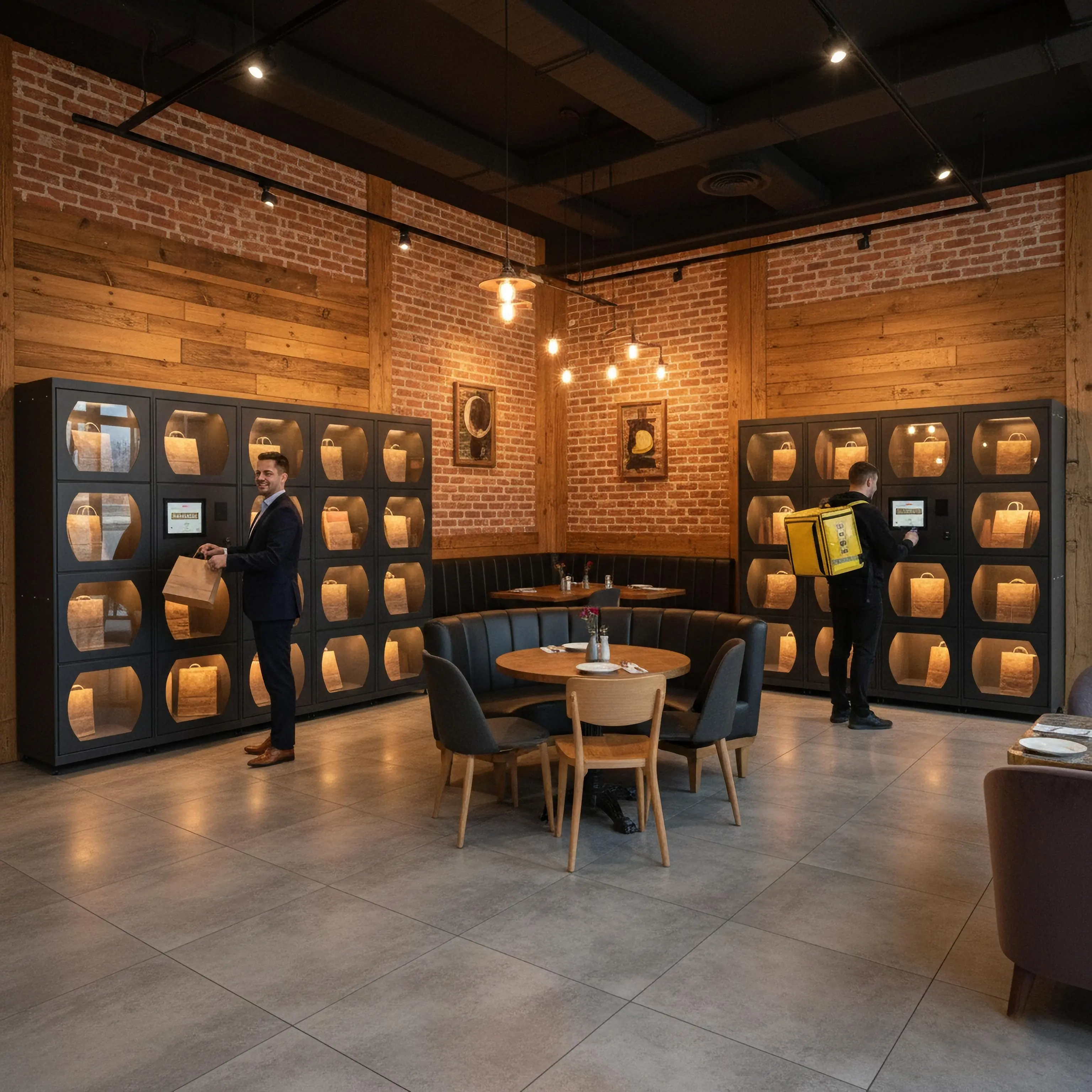
Burger King (Saudi Arabia) deployment processes average 220-260 daily orders per location. The mixed compartment sizing handles burger meals (medium), side orders (small), and family combo boxes (large) from the unified system. Peak hour throughput: 80-100 orders hourly with 28-second average pickup cycles.
Pizza-Optimized Systems
Pizza delivery operations face unique challenges: 33×33cm standard pizza boxes don't fit generic lockers, and temperature precision (62-65°C) maintains cheese melting without crust sogginess. Heated lockers for pizza delivery feature specialized configurations.
Pizza-specific specifications:
Compartment dimensions: 45×45×20cm (XL format)
Compartment count: 18-24 units
Temperature optimization: 62-65°C (cheese melting zone)
Humidity control: Optional moisture management prevents soggy crusts
Peak capacity: 24 simultaneous pizzas
Domino's deployment documented +12°C arrival temperature improvement (52°C→64°C) using a custom heated locker configuration, eliminating box crushing that plagued manual systems. System handles 85 pizzas hourly during dinner rush versus 50 pizzas with traditional coordination - 70% capacity increase without kitchen expansion.
Casual Dining Multi-Zone Systems
Restaurants serving hot entrees, room-temperature desserts, and chilled salads require simultaneous temperature zones impossible with single-zone systems. Restaurant heated locker multi-zone architecture combines.
Multi-temperature specifications
Zone Type | Temperature Range | Typical Contents | Compartments |
|---|---|---|---|
Heated | 60-65°C | Hot mains, soups | 8-12 units |
Ambient | 20-25°C | Salads, sushi, desserts | 6-10 units |
Refrigerated (optional) | 2-8°C | Dairy, cold beverages | 4-6 units |
Happy Bar & Grill deployed parallel heated and ambient systems: heated compartments (63°C) for grilled dishes, ambient compartments (22°C) for salads and sushi. Single unified pickup location - customers retrieve complete orders using one PIN code. This configuration enabled 55% takeaway growth by eliminating manual coordination between hot and cold pickup stations.
Ghost Kitchen Outdoor Units
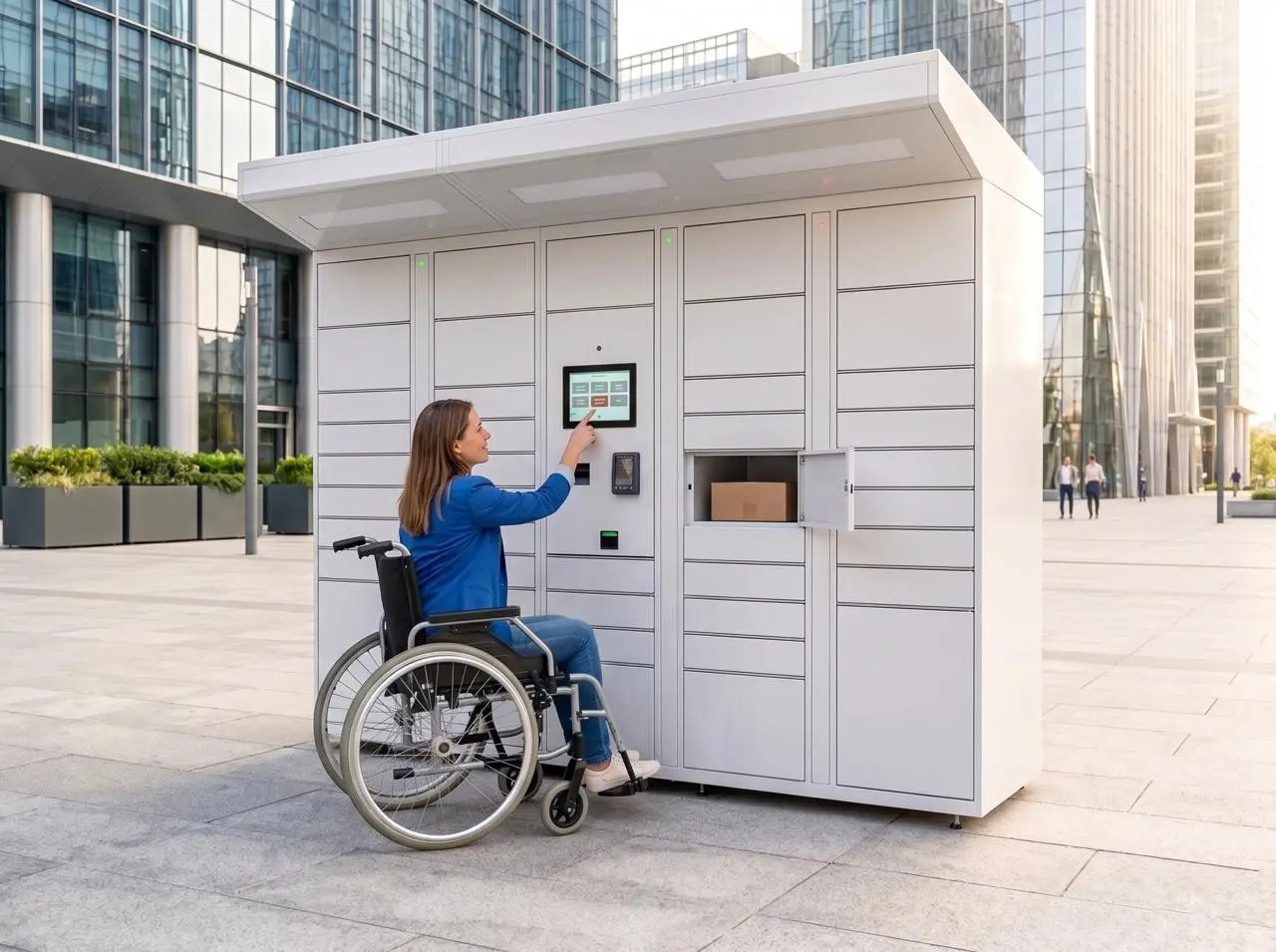
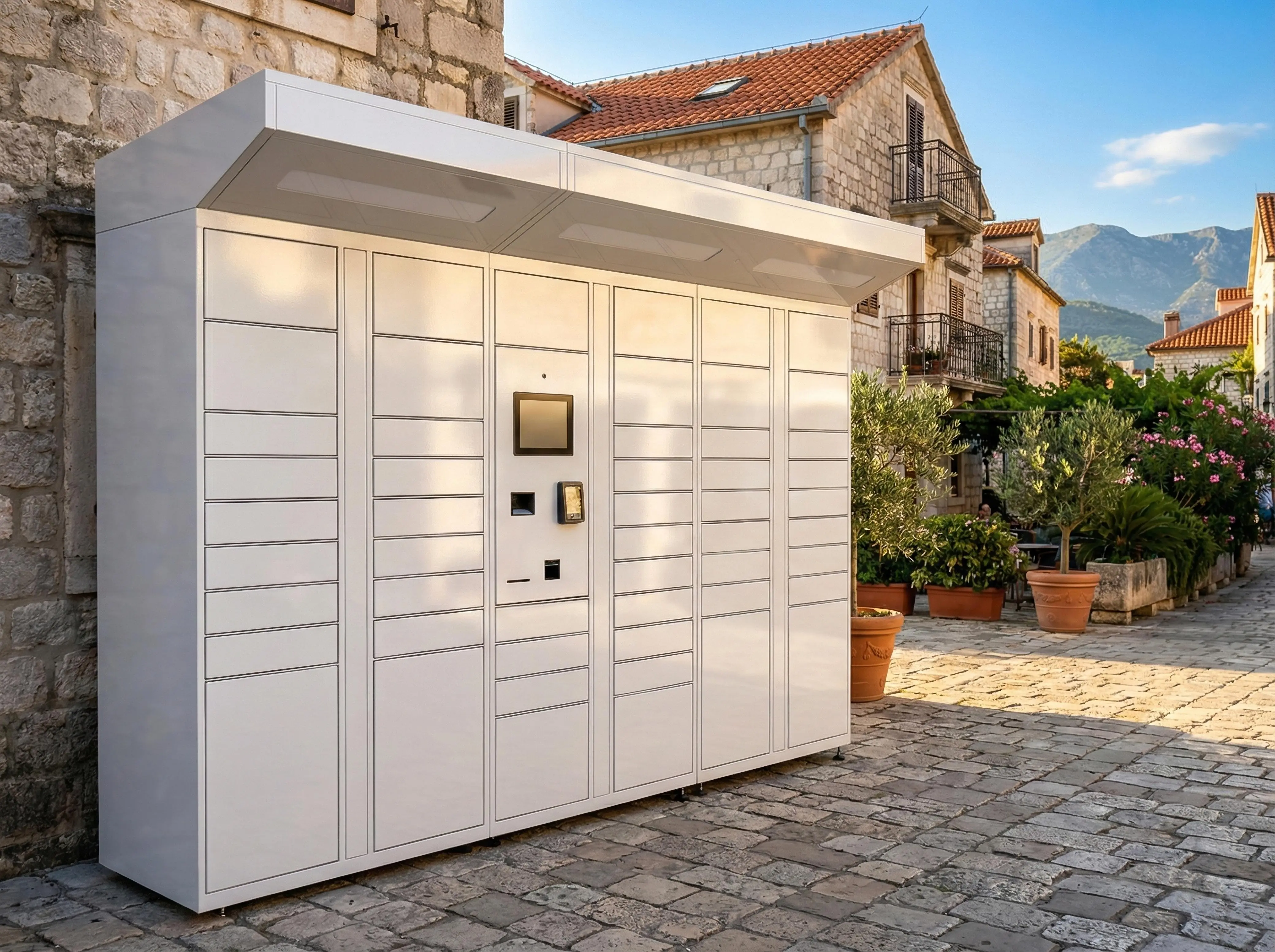
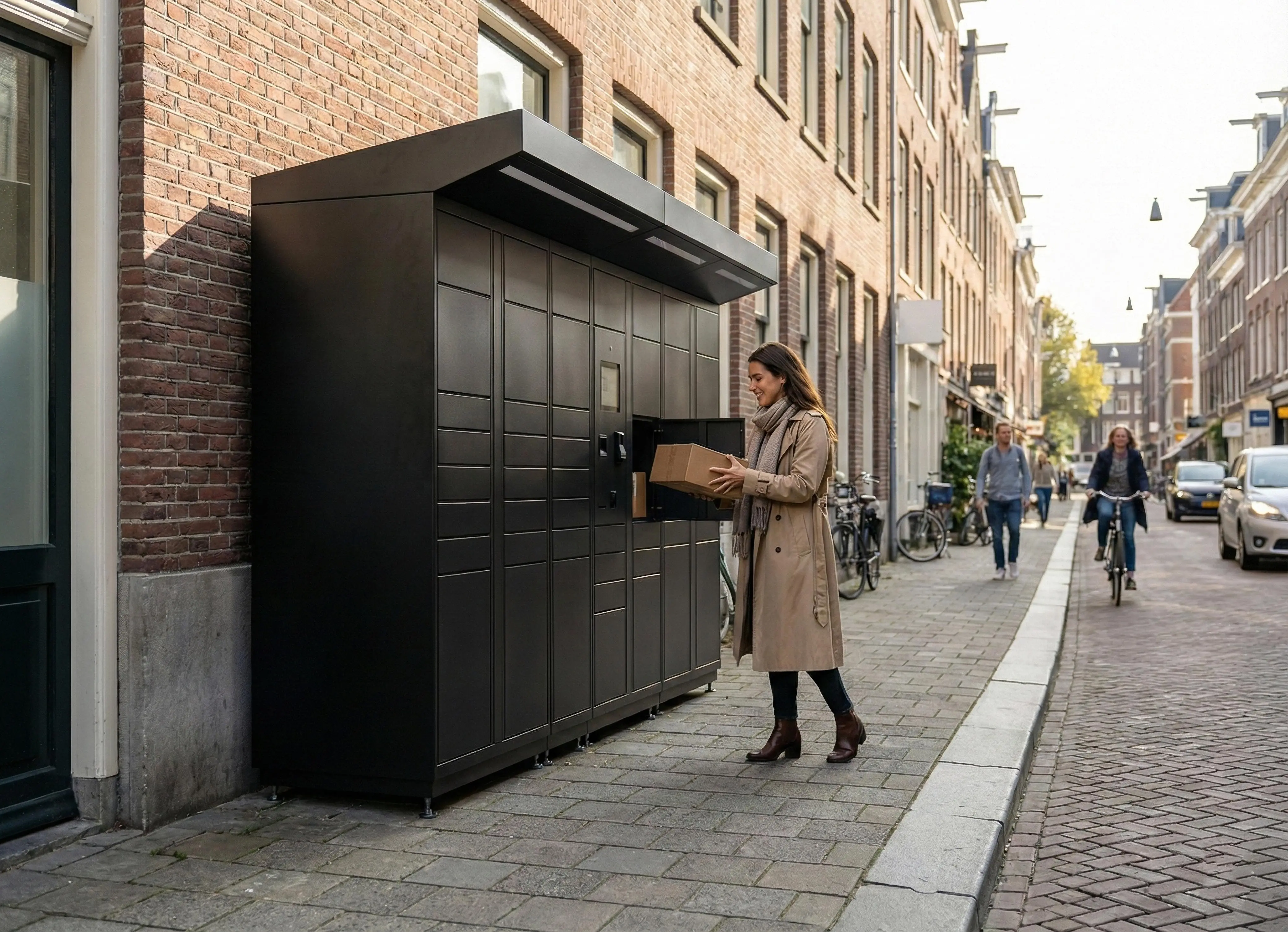
Cloud kitchens operating without retail storefronts require autonomous outdoor installations. Outdoor heated locker systems designed for 24/7 unmanned operation.
Autonomous deployment specifications:
Weatherproof rating: IP65/IP66 (dust-tight, water jet resistant)
Operating range: -20°C to +50°C ambient tolerance
Power options: Grid connection or solar panel hybrid
Connectivity: 4G/5G cellular (Wi-Fi-independent)
Security: GPS tracking, reinforced anchoring, tamper sensors
Capacity: 24-48 compartments (modular expansion)
Heated locker installation for ghost kitchens eliminates retail rent costs (€2,000-5,000 monthly) while maintaining full operational capacity. Parking lot deployments serve 280-310 daily orders from a 1.5m² footprint. Late-night service (22:00-06:00) generates 18-22% of daily volume without staff presence - drivers retrieve via time-limited PIN codes.
Explore outdoor parcel locker specifications for detailed weatherproofing standards and Western Balkans deployment strategies, showing regional expansion approaches for multi-location restaurant chains.
Pricing & Investment Models
Heated parcel locker systems range €13,000-€28,000 per unit depending on configuration complexity, compartment count, and temperature control requirements. Pricing reflects ISO 9001 certified EU manufacturing (Bulgaria), professional installation, and 12-month warranty coverage. Every deployment represents custom heated locker configuration engineered for specific restaurant operational requirements.
Hardware Investment by Configuration Type
Bespoke restaurant configurations
Fast food ambient system (12-18 compartments):
€13,000-€16,000 per unit
Custom design: Compartment sizing optimized for burger meals, side orders, family combos. 60-65°C heating zones, indoor installation, electrical setup
Pizza-optimized system (18-24 XL compartments):
€18,000-€22,000 per unit
Custom design: 45×45cm XL compartments engineered for standard pizza boxes, 62-65°C precision heating, humidity control preventing crust sogginess
Multi-zone casual dining (heated + ambient parallel systems):
€20,000-€25,000 per unit
Custom design: Parallel heated (60-65°C) and ambient (20-25°C) systems for simultaneous hot dishes and cold salads, unified management interface
Ghost kitchen outdoor unit (24-48 compartments):
€22,000-€28,000 per unit
Custom design: IP65 weatherproofing, -20°C to +50°C operation, 4G/5G connectivity, solar panel options, GPS tracking, reinforced construction
Investment includes heated locker installation: on-site setup (6-8 hours), electrical connection, network configuration, compartment calibration, system commissioning. Systems ship from EU manufacturing facility.
Software Platform Options
CYBER HIVE™ standard platform: €29-€99/month per locker
Includes: Cloud hosting, POS integration (Toast, Square, Lightspeed), delivery platform connectivity (UberEats, Bolt Food, Wolt, Glovo), remote diagnostics, security updates, API access, technical support
White-label custom software development: Custom pricing
For restaurant chains requiring: Branded mobile apps, proprietary management dashboards, multi-tenant architecture, custom analytics, ERP/inventory integration. Development investment varies based on feature complexity and integration requirements - contact for detailed proposal.
Most single-location and small chain deployments use CYBER HIVE™ standard platform. Enterprise chains with 10+ locations often invest in white-label solutions for complete brand control and custom workflow automation.
Ongoing Operational Costs
Monthly recurring expenses per heated food locker unit:
Software licensing: €29-€99/month
CYBER HIVE™ platform (standard) or white-label licensing fee
Maintenance & support: €80-€150/month
Preventive maintenance programs, component replacement reserves, remote diagnostics, on-site technician visits (if needed), door mechanism servicing, warranty coverage beyond initial 12 months
Utilities (configuration-dependent):
Heated zones only (60-65°C): €50-€80/month electricity
Multi-zone systems (heated + ambient): €80-€120/month
Multi-zone with refrigeration: €180-€250/month
Insurance & site costs: €20-€50/month
Equipment protection coverage, location lease fees (if applicable)
Total monthly operations: €179-€499 per unit depending on configuration and software choice
Total Cost of Ownership Example
3-year TCO projection: Fast food deployment (2 heated smart lockers, CYBER HIVE™)
Initial investment:
Hardware (2 units, custom configuration): €26,000-€32,000
Installation: Included
12-month warranty: Included
Recurring costs (36 months):
Software licensing: €2,088-€7,128 (€29-€99/month × 2 × 36)
Maintenance & support: €5,760-€10,800 (€80-€150/month × 2 × 36)
Utilities (heated only): €3,600-€5,760 (€50-€80/month × 2 × 36)
Insurance & site: €1,440-€3,600 (€20-€50/month × 2 × 36)
Total 3-year investment: €38,888-€59,288
Average monthly cost: €1,080-€1,647
Labor cost eliminated: €4,800-€7,200/month (2-3 staff positions during peak hours)
Net monthly benefit: €3,153-€6,120
Payback period: 4.2-6.6 months
Multi-location restaurant chains deploying restaurant heated lockers achieve operational efficiency through centralized CYBER HIVE™ management controlling multiple sites from unified dashboard. Parallel deployment schedules reduce installation time 30-40% across locations. Insurance providers recognize automated temperature logging systems, with some offering 5-12% premium reductions for restaurants implementing certified solutions.
Conclusion: Deploy Heated Smart Lockers in Your Restaurant
Heated smart lockers eliminate the €5,180 monthly operational drain restaurant operators face from manual delivery coordination. The technology combines industrial-grade temperature control (60-65°C precision) with automated driver coordination, delivering measurable results: 89% reduction in temperature complaints, 47% decrease in delivery operation costs, and 40-70% peak hour capacity increase verified across Burger King, Domino's, and Happy Bar & Grill deployments.
Investment ranges €13,000-€28,000 per unit depending on configuration complexity, with 4.2-6.6 month payback from labor elimination alone. Restaurant heated locker systems integrate with existing POS platforms (Toast, Square, Lightspeed) and delivery apps (UberEats, Bolt Food, Wolt, Glovo) in 48 hours, requiring 1.5m² floor space and standard electrical connection.
Every bespoke heated locker solution represents custom engineering - not catalog products. Compartment layouts optimize for specific menu formats (burger meals, pizza boxes, multi-temperature orders). Temperature controlled food locker zones accommodate operational requirements: fast food ambient systems, pizza-optimized 62-65°C configurations, casual dining heated+ambient parallel systems, or ghost kitchen outdoor weatherproof units.
Ready to eliminate delivery coordination costs?
Contact Parcel Hive engineering team for custom heated locker configuration proposal matching your menu formats, daily order volumes, temperature requirements, and site constraints. Provide: restaurant format (fast food/pizza/casual dining/ghost kitchen), average daily orders, indoor vs outdoor placement, existing POS system.
Frequently Asked Questions
How much does a heated smart locker cost for restaurants?
What temperature do heated food lockers maintain?
How fast is the ROI for heated parcel lockers in restaurants?
Do heated smart lockers work with existing POS and delivery apps?
What compartment sizes do heated food lockers offer?
Can heated parcel lockers be installed outdoors?
How do multi-temperature food lockers work for restaurants with hot and cold items?
What ongoing maintenance do heated smart lockers require?